Whether you're in pain, were told you have a stone, or have noticed blood in your urine — we evaluate, monitor, and treat kidney stones across the NYC tri-state area. Many hospitals take a month or more to get patients treated; in eligible cases we're often able to move much faster, and we prioritize anyone in active pain.
You don't need to be in agony to see us. If any of these sound like you, it's worth getting evaluated — catching a stone early is far easier than dealing with an emergency later.
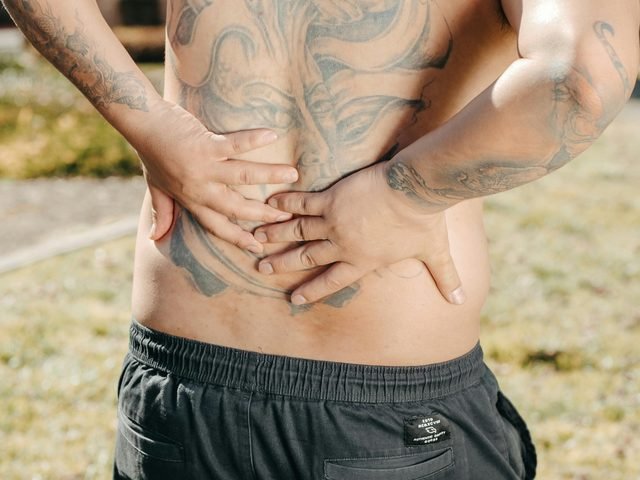
Flank, back, or groin pain that comes in waves is the classic sign of a stone on the move. We prioritize patients in active pain and work to get you comfortable and evaluated quickly.
A scan somewhere — an ER, another doctor, a routine CT — showed a stone, and you were sent home to "wait and see." We can tell you whether waiting is actually the right move for your stone.
Visible or microscopic blood can be an early sign of a stone — or something else worth ruling out. It's a reason to get checked, not to panic.
If you've passed a stone before, your odds of forming another are high. Ongoing monitoring and prevention can keep you ahead of the next one.
Someone once mentioned you had a stone, but it was never tracked or treated. Stones don't always announce themselves — a quiet one can grow.
Not every stone needs treatment today. We do a lot of stone monitoring — imaging on a sensible schedule so we act only when we genuinely need to.

Most people are told to "drink water and wait." For the smallest stones that's reasonable. But the odds fall sharply as size increases, the stones that do pass often take weeks and hurt the whole way, and a stone left alone can keep growing — making it harder to treat later. Here's what the research shows about the chance a ureteral stone passes on its own.
Passage rates are a compilation of published studies; pain reflects our clinical experience. Your own odds depend on your stone — an evaluation tells you.
Lithotripsy breaks a stone into tiny fragments. Get a stone down to roughly 2 mm or less and it passes on its own about 98% of the time — the easiest, most comfortable way out.
Passing a stone is not the same as passing it comfortably. In one study of patients sent home to pass stones under 9 mm, about 4 in 5 needed pain medication and roughly half needed opioids. In our experience even a 3 mm stone causes significant pain in many patients, and that tends to rise with size. Few people want to endure days or weeks of pain and nausea waiting one out — which is why a small but painful stone is often worth treating.
Left alone, a stone can get larger — and the bigger it gets, the lower its chance of passing and the harder it is to treat. Acting while it's small keeps your options simplest.
A quick evaluation tells you your stone's size and location — so "wait and see" becomes an informed choice, not a gamble.
Guidelines caution against waiting beyond about 4–6 weeks with a stone that isn't passing, to protect the kidney. We help you avoid that limbo.
Where a hospital may take a month to schedule, we work to move eligible patients along sooner — and prioritize anyone in pain.
Here's the part that's easy to miss. After the first severe episode, the pain often fades — and people assume the stone passed and they're fine. But sometimes the stone is still there, quietly blocking the kidney without hurting. A kidney that stays blocked can slowly and silently lose function, and unlike the pain, that damage doesn't always come back.
A stone can keep blocking the ureter after the pain settles. A 5–6 mm stone can sit lodged for weeks or even months — feeling fine while the backed-up kidney is under pressure the whole time.
A prolonged blockage damages the kidney behind it. Studies show kidney injury from obstruction can begin within a week or two, and the longer it lasts, the more of that loss becomes permanent.
The encouraging flip side: when an obstructing stone is relieved promptly, kidney function typically bounces back. The research is clear that it's silent, long-standing blockages — the ones left too long — that tend to cause irreversible loss.
This is the real reason we don't like the open-ended "wait and see" approach for a stone that isn't clearly going to pass quickly. A short, monitored trial of passage is reasonable. Months of unmonitored waiting — especially once the pain has quieted — is how people lose kidney function without ever realizing it was happening. A simple follow-up scan confirms whether a stone has actually passed or is still sitting there.
Sources include the Merck Manual (obstructive uropathy) and peer-reviewed studies of silent vs. symptomatic ureteral stones (e.g. Kim et al.), which found that promptly treated symptomatic stones recovered kidney function while silent, chronically obstructing stones often did not. Timelines and outcomes vary by individual; this is general information, not a substitute for evaluation.
For stones that are good candidates, shockwave lithotripsy (ESWL) breaks the stone up with focused sound waves — no incision, no scope, no overnight stay. Yet many area hospitals offer it only on limited days, or not at all, so patients are often routed straight to bigger procedures like ureteroscopy (URS) or percutaneous nephrolithotomy (PCNL). We make lithotripsy readily available and recommend it first whenever your stone qualifies.
Lithotripsy is outpatient. Bigger procedures usually mean a longer recovery and, often, a temporary stent.
Across the research, ESWL carries a lower complication rate than PCNL for suitable stones.
No waiting for the one day a month a machine is scheduled — lithotripsy is core to our practice.
Lithotripsy is not right for every stone. Larger stones, certain lower-pole stones, and harder stone compositions may be better treated with ureteroscopy or PCNL, which can achieve higher stone-free rates in some cases. The right choice depends on your imaging and overall health, and is decided together after an evaluation.
Shockwave lithotripsy is about as non-invasive as a treatment gets. There's nothing to cut and nothing inserted to reach the stone. We locate it precisely with X-ray or ultrasound, then focus sound waves from outside the body to break it into small fragments you pass naturally. Because nothing enters the body to reach the stone, serious complications are uncommon — and the side effects that do occur are usually minor and short-lived.
X-ray or ultrasound pinpoints the stone and the energy is focused on that spot — the rest of your body isn't in the path.
Major urology guidelines recommend lithotripsy as a first-choice option for many stones under about 1 cm — exactly the everyday stones we see most.
No incision means no hospital stay to recover from one — it's an outpatient treatment, and we can arrange an Uber ride home if you need it.
Across published studies, lithotripsy clears roughly 75–85% of well-selected stones — and success climbs further when a second session is needed, since the treatment can simply be repeated. Outcomes depend on stone size, location, and density, which is why selection matters.
The common ones are temporary: a little blood in the urine for a day or two, and some soreness in the flank as fragments pass. Serious complications are uncommon — in large series, major events occur in only about 1% of cases.
A larger or denser stone may need a second (occasionally a third) treatment to clear fully. We'll tell you upfront if that's likely, so there are no surprises — and because there's no incision, repeating it is straightforward.
Success and complication figures are drawn from published ESWL studies (stone-free rates commonly reported around 75–85% for stones under ~2 cm; major complication rates near 1%, with minor, self-resolving effects such as transient hematuria more common). Results vary by stone and patient; your candidacy and likely outcome are determined after imaging.
Crowded ERs are built for triage and speed, which sometimes means defaulting to the fastest available intervention. Our office is built for focused stone care — relieving your pain first, then choosing the right treatment together.
Internal stents are sometimes medically necessary — but they can be uncomfortable. When your situation allows, our aim is to relieve pain and treat the stone directly, so a stent isn't needed. We'll always tell you honestly when one genuinely is.
With structured, non-narcotic pain management, many patients become substantially more comfortable within hours. Once your pain is controlled, we can plan a thoughtful treatment rather than rushing an invasive decision under duress.
Waiting at home for a stone to pass can mean prolonged, severe pain and the risk of new blockages. Where appropriate, targeted shockwaves break the stone into tiny fragments that pass far more easily — often a gentler path than the waiting game.
Prompt evaluation and non-narcotic IV or intramuscular pain control in a calm, professional setting — without the chaos of a hospital waiting room.
Extracorporeal shockwave lithotripsy (ESWL) uses focused sound waves to break eligible stones into tiny fragments — no incisions. In-office anesthesia keeps you comfortable throughout.
If your pain doesn't settle or your case calls for it, we don't leave you stranded. Through our referral relationship with hospitals across the area, we coordinate hospital-based care — including a stent — as a backup plan.
Safety backupCandidacy for in-office lithotripsy depends on stone size, location, composition, and your overall health, and is determined only after an in-person evaluation. Outcomes vary by patient.
A specialized practice built around one of the most painful, most urgent urologic conditions — with the experience to treat it calmly and well.
Led by David Shusterman, MD, a urologist focused on the diagnosis and treatment of kidney stones.
Non-invasive stone treatment recommended first whenever your stone is a good candidate — over bigger procedures like URS or PCNL.
In-office anesthesia for procedures and non-narcotic IV/IM pain control for acute stone pain.
Established referral relationships across the area — including the urology leadership at Lenox Hill Hospital — so patients we refer are seen on an expedited basis.

Dr. Shusterman leads NY Litho with a focus on getting kidney stone patients out of pain quickly and treating their stones with the least-invasive appropriate option. Patients come from across all five boroughs — Manhattan, Queens, Brooklyn, the Bronx, and Staten Island — as well as Long Island and New Jersey.
His approach centers on non-invasive shockwave lithotripsy for stones that qualify, in-office anesthesia so procedures are comfortable, and non-narcotic pain control for patients in acute distress. When hospital-based care is the right call, established referral relationships across the area mean patients are coordinated quickly rather than left to navigate a crowded ER alone.
Two quick questions and your contact details — we'll take it from there.
Want to reserve a consultation slot now?
Your intake has been received. Here's what happens next.
Prefer to use insurance? Choose "Verify my insurance instead" and our team will confirm your coverage before any deposit.
Demo placeholder — no real payment is processed.
Most stone patients we see are uncomplicated — two working kidneys, no fever, and no sign of infection. If you have a fever, can't urinate, have only one kidney, or are pregnant, those situations need emergency hospital care first; otherwise, an evaluation with us is a sensible next step.