
Your discharge is a starting point for follow-up
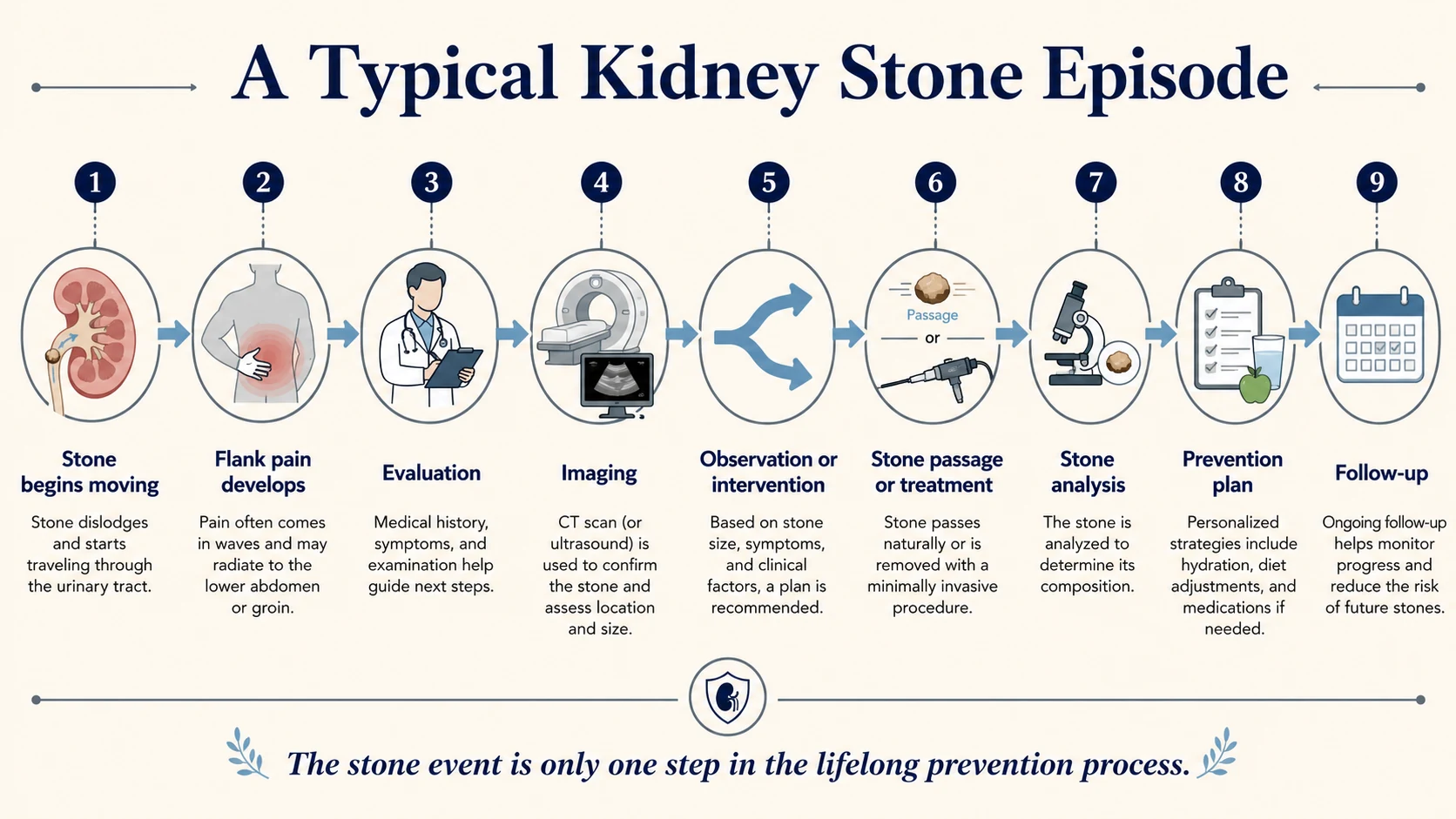
The emergency visit may control pain and identify a stone, but the next question is whether it has cleared and whether the kidney is draining safely. Contact the office to discuss an appointment rather than assuming that a long wait is required. Tell us if the pain continues, returns or changes. Appointment and treatment timing depend on the clinical assessment and availability.
Bring the information that prevents a repeat workup
Gather the discharge summary, imaging report and actual images if available, blood and urine results, and medication instructions. Tell us what you have taken, what helped and whether you recovered a stone. If a stent or another drainage device was placed during your hospital care, bring that information and its follow-up instructions too.
Leave with named next steps
The plan may include office imaging, a review of pain medicines, selected medication to assist passage, or evaluation for ESWL. IV ketorolac may be considered in our office when medically appropriate; kidney function, bleeding risk and other medicines affect its use. It is not a guarantee of pain relief or a substitute for checking a blockage. Urgent warning signs require urgent care rather than waiting for routine follow-up.
Your next steps
- Keep all hospital records in one folder.
- Ask how and when clearance will be confirmed.
- Know whom to call and when to seek urgent care.
Keep exploring
Book and sources
Adapted from Stones Unlocked by David Shusterman, MD. Treatment and prevention are individualized.