
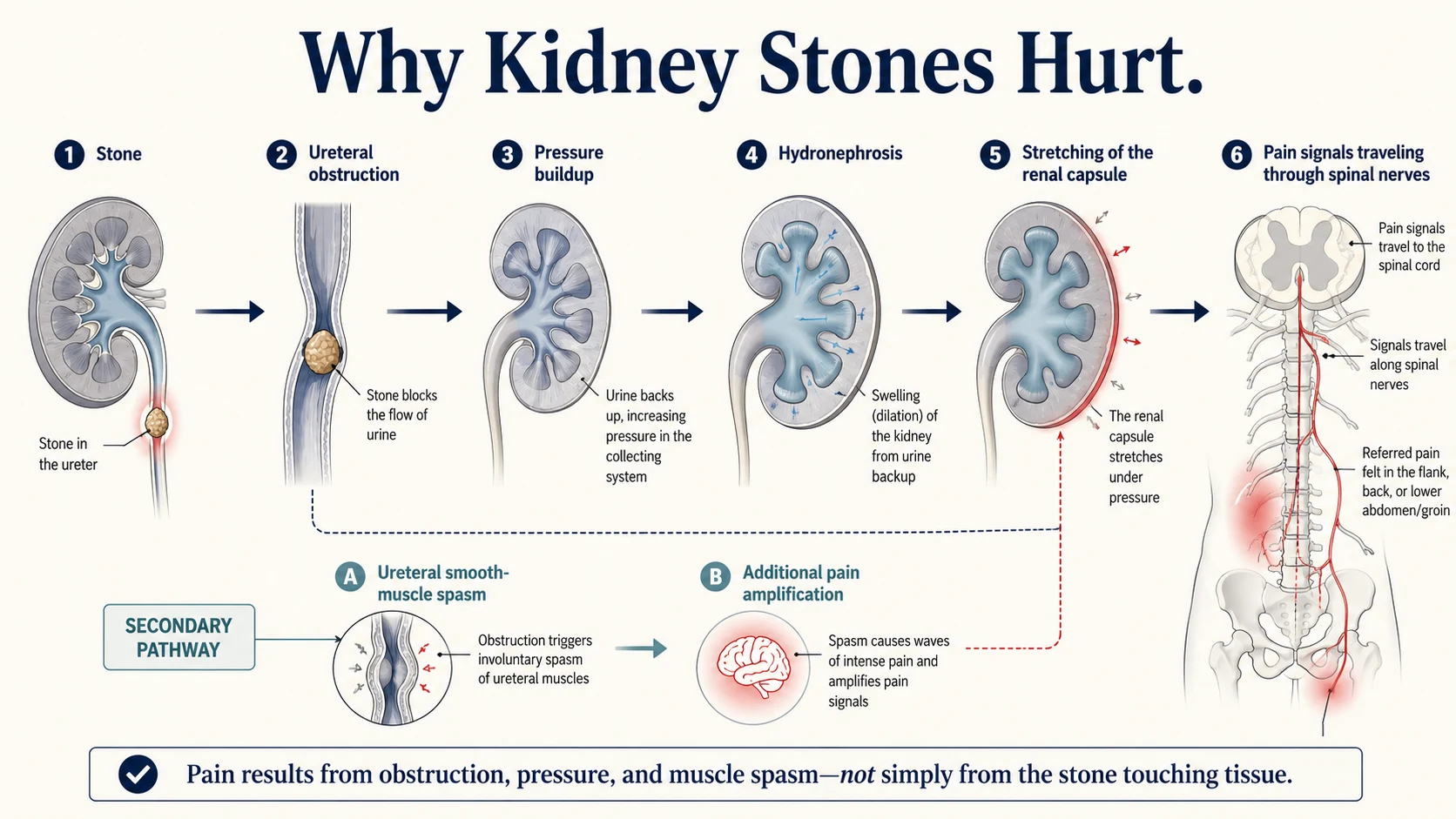
The pain is often about the plumbing
A stone in the ureter can interfere with urine draining from the kidney. Pressure, stretching and ureteral activity can produce intense flank pain that moves toward the lower abdomen or groin. Nausea may accompany an episode. The intensity of pain does not reliably tell us the stone’s size, location or the amount of kidney risk.
A quieter day is useful information, not the finish line
Pain can fluctuate as drainage and the stone’s position change. Medication can also reduce symptoms while the stone remains. That is why “I feel better” and “the stone is gone” are different findings. We use your course, recovered-stone information and appropriate imaging to determine what happened.
Make the episode easier to evaluate
Write down when pain began, where it occurs, what medication you took and whether you have seen a stone pass. Do not force large amounts of water to push an acutely obstructing stone through. Fever, chills, uncontrolled pain, persistent vomiting or inability to urinate require urgent assessment. An infected blockage is an emergency; do not wait for an office appointment.
Your next steps
- Keep discharge papers and your medication list together.
- Arrange follow-up even if pain settles.
- Seek urgent assessment for the warning signs above.
Keep exploring
Book and sources
Adapted from Stones Unlocked by David Shusterman, MD. Treatment and prevention are individualized.