
A stone can be quiet before it becomes noticeable
A stone resting in the kidney may cause no symptoms. It may stay stable, grow or later move into the ureter. Pain is not a reliable inventory of how many stones you have. If you have a prior stone history and have not had follow-up, bring that history to an evaluation rather than assuming that silence means the kidney is stone-free.
A quiet stone and a quiet blockage are different problems
Some asymptomatic stones can be monitored. A persistent obstruction raises a different concern because urine drainage and kidney function may be affected, even when pain is limited. The risk depends on the clinical situation and duration; we cannot estimate it from symptoms alone. Imaging and other findings help distinguish these situations.
Choose observation or treatment with a documented plan
We assess size, location, change over time, symptoms and kidney health before recommending a plan. A surveillance plan should say what is being watched and when to return. ESWL may be considered for suitable stones after evaluation. The point is to make a deliberate decision and confirm drainage, not to predict that every quiet stone will become an emergency.
Bring the earlier scan, even if you feel well
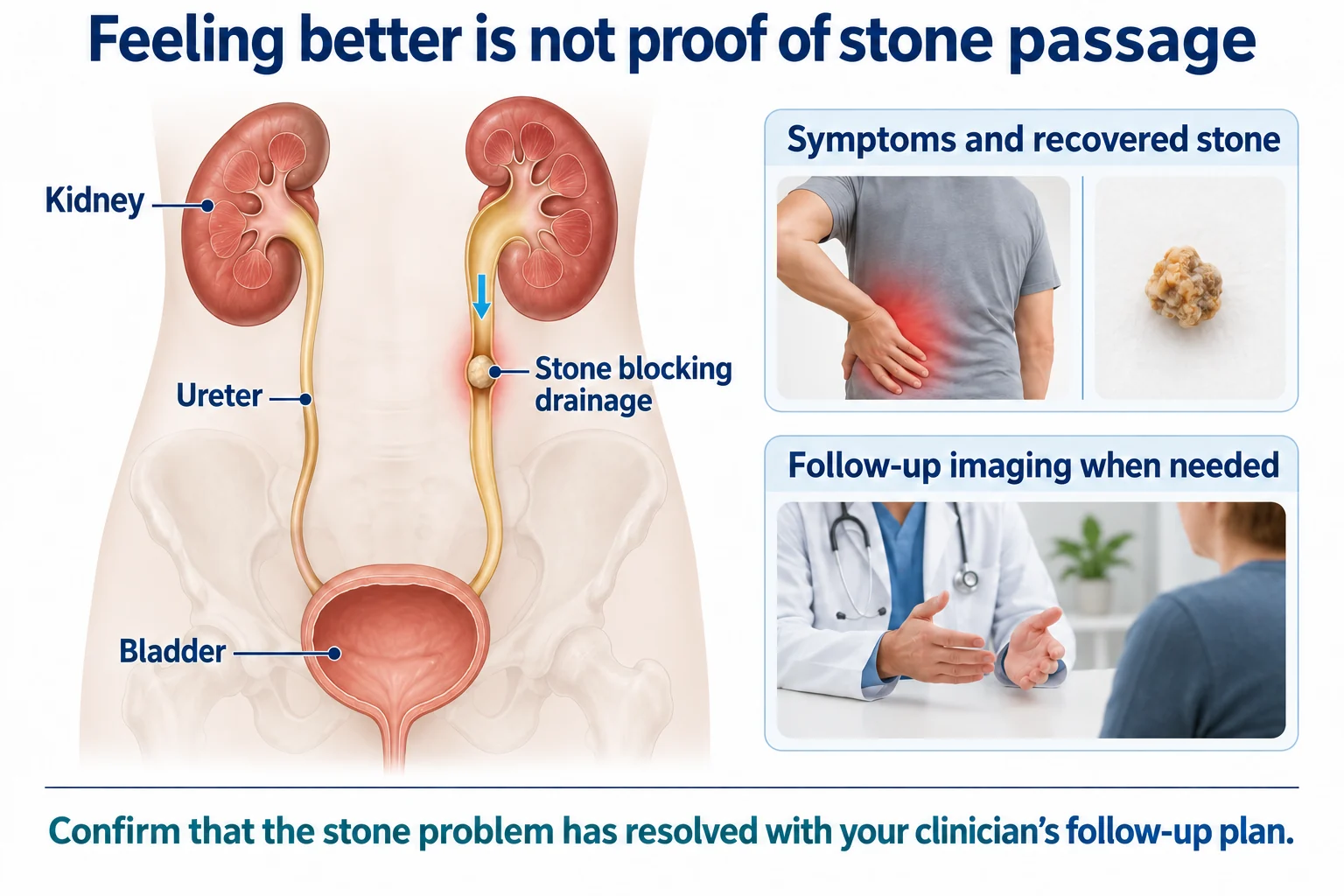
An earlier ultrasound or CT can show what was present at a particular time. Comparing studies helps us assess a stone’s size, position and change. Tell us if a stone episode was never followed to resolution or if you were told that the kidney was swollen. No pain today does not tell us whether that finding has resolved.
Know what surveillance is checking
A follow-up plan may watch stone growth and look for signs of impaired drainage. A quiet stone remaining in the kidney is different from a stone obstructing a ureter. The imaging method and interval depend on that distinction and your health. Do not use a routine six-to-twelve-month surveillance interval to delay assessment of a suspected unresolved blockage.
Your next steps
- Find your most recent stone imaging and report.
- Ask whether the kidney is draining normally.
- Agree on a follow-up interval and reasons to return sooner.
Keep exploring
Book and sources
Adapted from Stones Unlocked by David Shusterman, MD. Treatment and prevention are individualized.