
Measure a day of urine, not a single moment
For selected stone formers, a timed urine collection shows patterns that a spot sample may miss. Depending on the laboratory panel, it can measure urine volume and factors such as calcium, oxalate, citrate, uric acid, sodium and pH. Those findings help us identify which changes may be useful for you.
The collection instructions are part of the test
Use the laboratory’s exact start, finish, storage and container instructions. Missing a collection or using the wrong timing can make the results harder to interpret. Tell the office about any collection problem rather than trying to correct it silently. Ask whether you should follow your usual routine, and disclose medication or dietary changes that occurred during the collection.
Turn numbers into an achievable plan
We interpret the report with stone composition, kidney function and your medical history. A low urine volume may call for a practical fluid plan; other findings may support specific dietary changes or medication. Avoid selecting a supplement from one abnormal number alone. Your clinician may repeat testing after changes to see whether the intended chemistry improved.
Read the report as a pattern
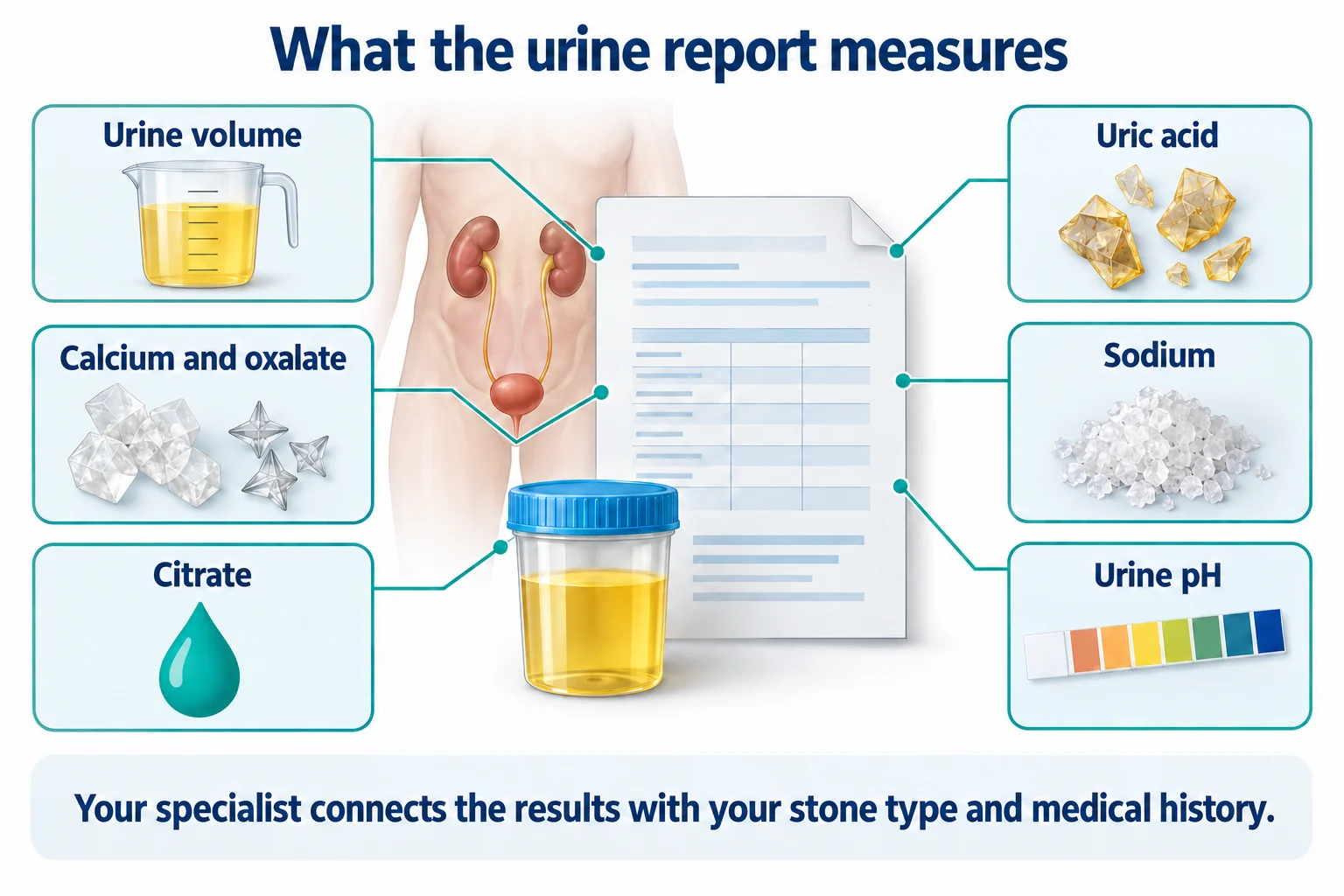
Volume describes how much urine was produced during the collection. Calcium, oxalate and uric acid describe selected stone-forming substances; citrate and pH add different information about the urine environment. Sodium can help frame the food discussion. Values are interpreted together, with collection quality, stone composition and kidney function. A flagged number is a starting point for a conversation, not a diagnosis by itself.
Make the collection usable
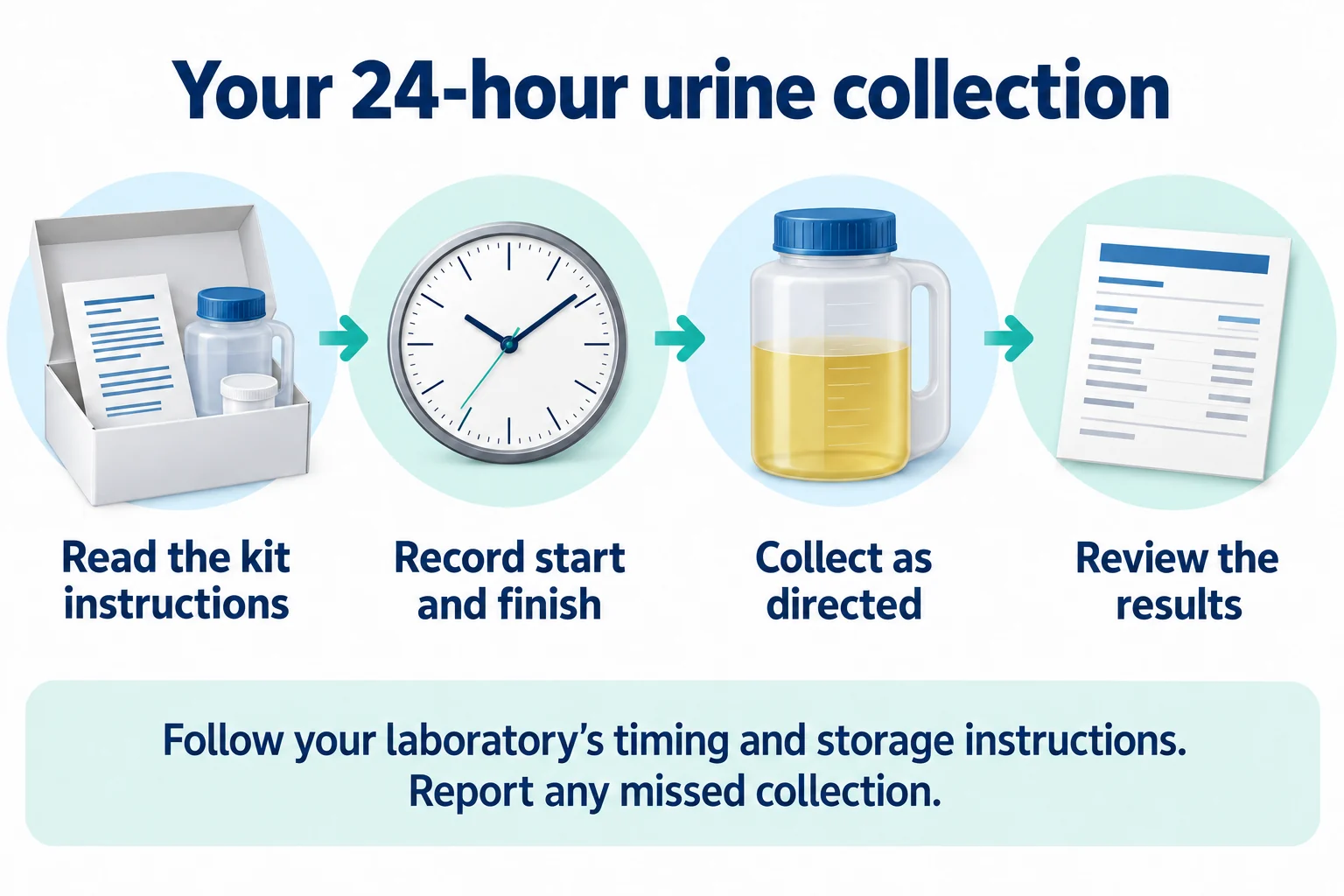
Choose a day when you can follow the kit instructions fully. Check the start and finish rules, storage requirements and return arrangements before starting. Some evaluations use more than one collection; ask how many your clinician ordered. If you miss urine or spill a sample, tell the laboratory or office and ask whether to repeat. Record unusual diet, illness or medication changes instead of quietly changing your routine to produce a better-looking result.
Your next steps
- Confirm timing and storage before you start.
- Report missed samples or unusual circumstances.
- Ask which finding is the first priority and when to reassess it.
Keep exploring
Book and sources
Adapted from Stones Unlocked by David Shusterman, MD. Treatment and prevention are individualized.