
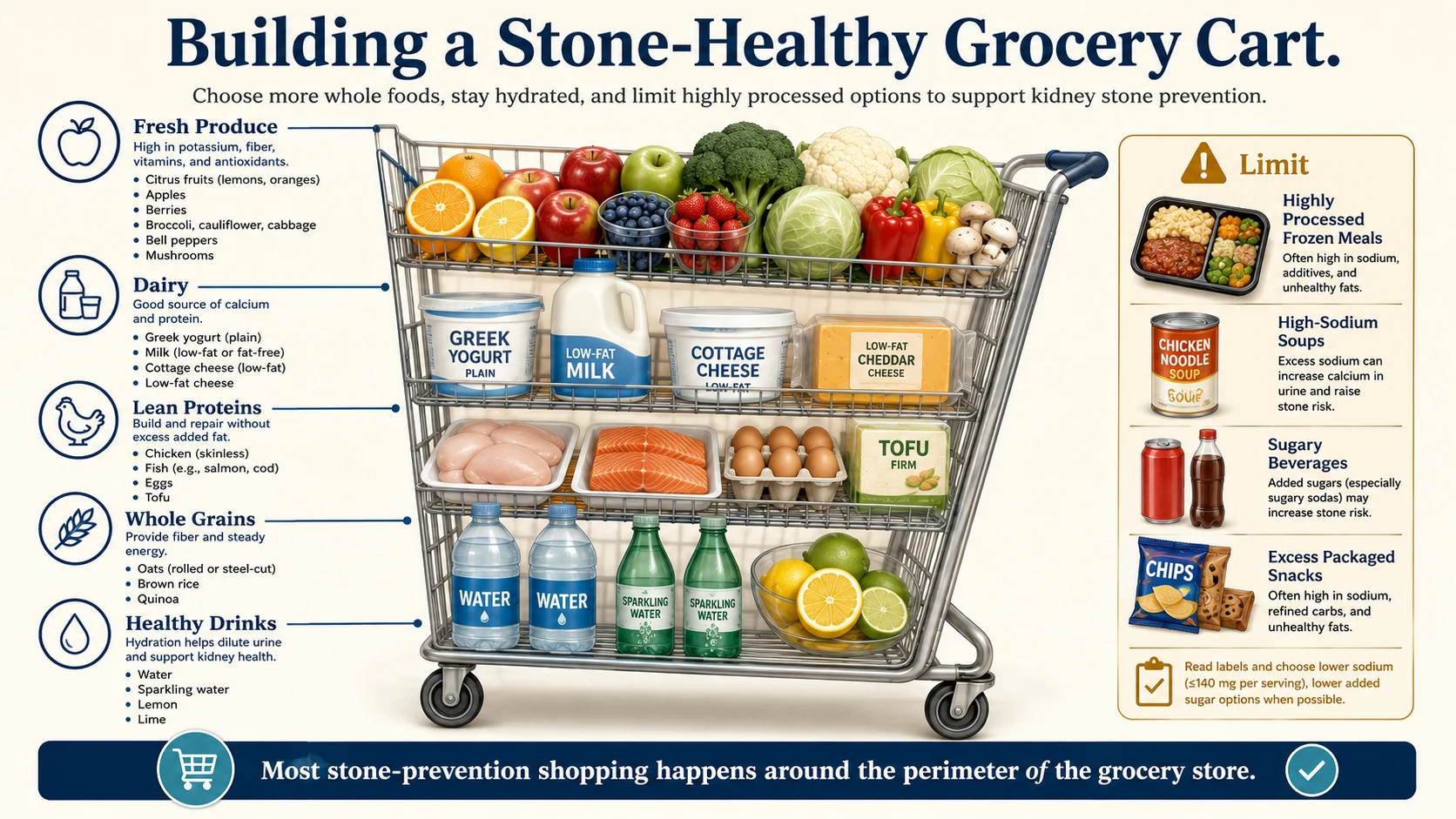
Start with your everyday routine
A prevention diet should fit your stone chemistry, health and real meals. Tell us what you drink, where you eat and which changes would be difficult. A long list of forbidden foods is rarely a useful starting point. We can help identify a few changes that address the strongest findings in your history and testing.
Balance calcium, sodium and protein thoughtfully
Calcium-containing foods can help bind oxalate in the gut when eaten with meals. Cutting out dietary calcium without a reason can be counterproductive. Sodium, portions and animal-protein patterns may also need attention. Some calcium oxalate stone formers benefit from reducing large or frequent portions of particular high-oxalate foods. Supplements require a separate review; food calcium and a pill are not interchangeable decisions.
Make fluid advice fit your health
A steady routine is more practical than drinking a large amount at one time. Needs change with heat, exercise and illness. Kidney or heart conditions may limit fluids or certain foods, so follow your individual instructions. Use your urine results and follow-up discussion to refine the plan instead of assuming that one diet prevents every type of stone.
Keep calcium advice connected to meals
For many calcium oxalate stone formers, normal dietary calcium eaten with meals helps bind oxalate before it is absorbed. Removing dairy or all calcium foods without a specific reason can work against prevention. Discuss food choices and supplements separately with your clinician. The aim is a balanced pattern that fits your stone chemistry, rather than a universal list of foods everyone must avoid.
Build a routine you can repeat
Start with the largest sodium sources in your own meals: packaged soups, sauces, restaurant portions or processed snacks. Compare the same portion when choosing a lower-sodium option. Spread your permitted fluids through the day, including during work and travel. If kidney or heart disease limits fluids, potassium or certain foods, those instructions take priority. Review the plan with your urine results and make the next change achievable.
Your next steps
- Bring a typical day’s food and drink list.
- Choose one sodium change and one realistic habit to begin.
- Review supplements and any fluid restrictions with your clinician.
Keep exploring
Book and sources
Adapted from Stones Unlocked by David Shusterman, MD. Treatment and prevention are individualized.