
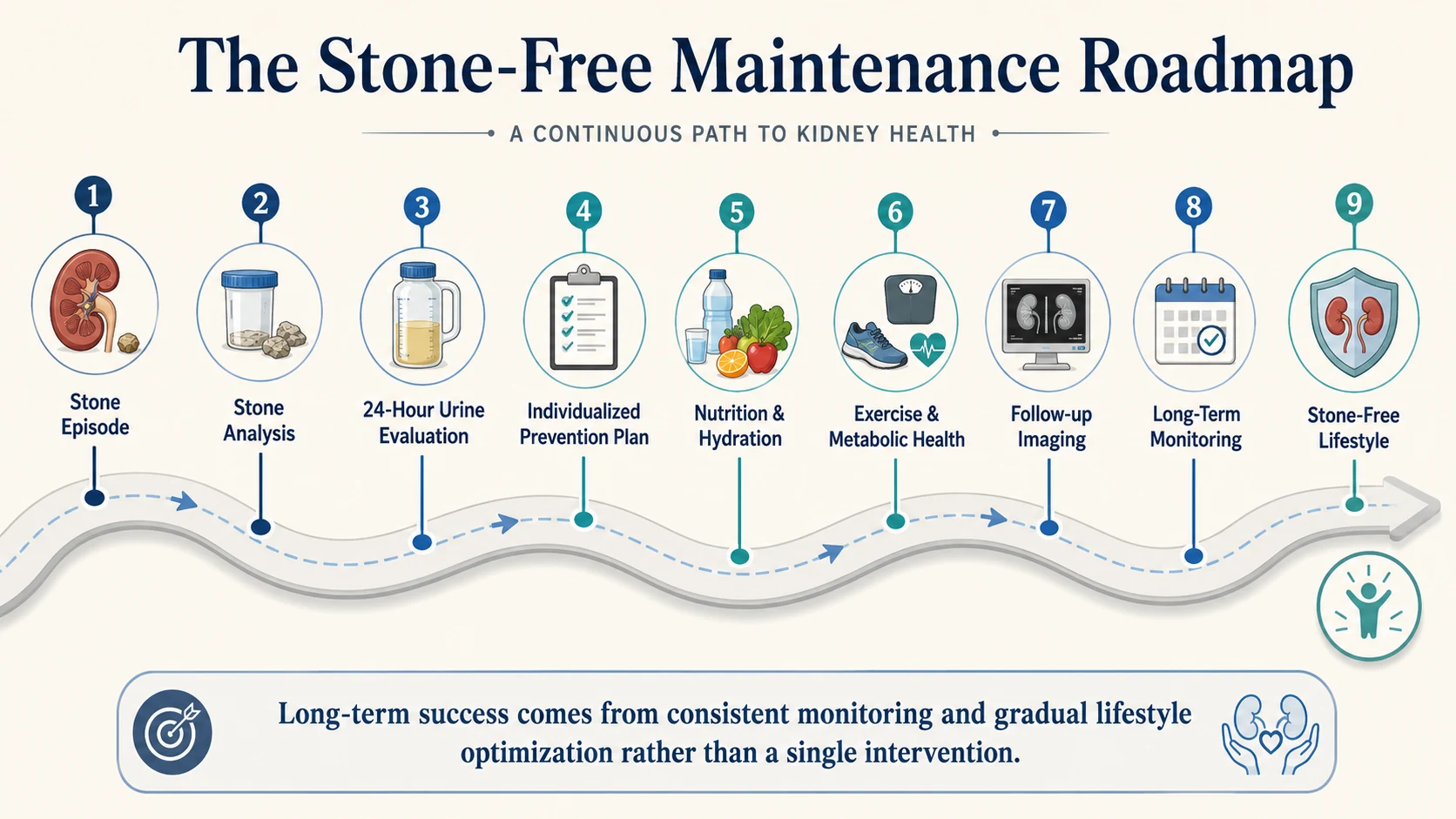
Tell us about the pattern, not just the latest episode
Repeated stones, stones beginning at a young age, a strong family history or a known inherited condition can justify a more detailed evaluation. Bring your previous stone reports and treatment dates. A pattern of stones can reveal a prevention problem that a single emergency visit cannot fully address.
Your other conditions matter
A solitary kidney, reduced kidney function, recurrent urinary infection, bowel disease or prior bowel surgery can change the questions we ask. Pregnancy, medication use and restrictions on food or fluid also matter. These conditions do not all produce the same risk; they are reasons to tailor the plan rather than apply generic instructions.
Ask for a plan suited to your situation
Your assessment may include more specific laboratory work, selected urine collections or closer imaging follow-up. Let the office know about new symptoms and changes in kidney health. Someone with one functioning kidney or suspected infection and obstruction may need prompt assessment. Do not simply wait for the next routine surveillance date if your condition changes.
Your next steps
- Bring previous episodes, stone results and family-history details.
- List kidney, bowel and infection history and all medications.
- Ask what changes your testing or follow-up interval.
Keep exploring
Book and sources
Adapted from Stones Unlocked by David Shusterman, MD. Treatment and prevention are individualized.