
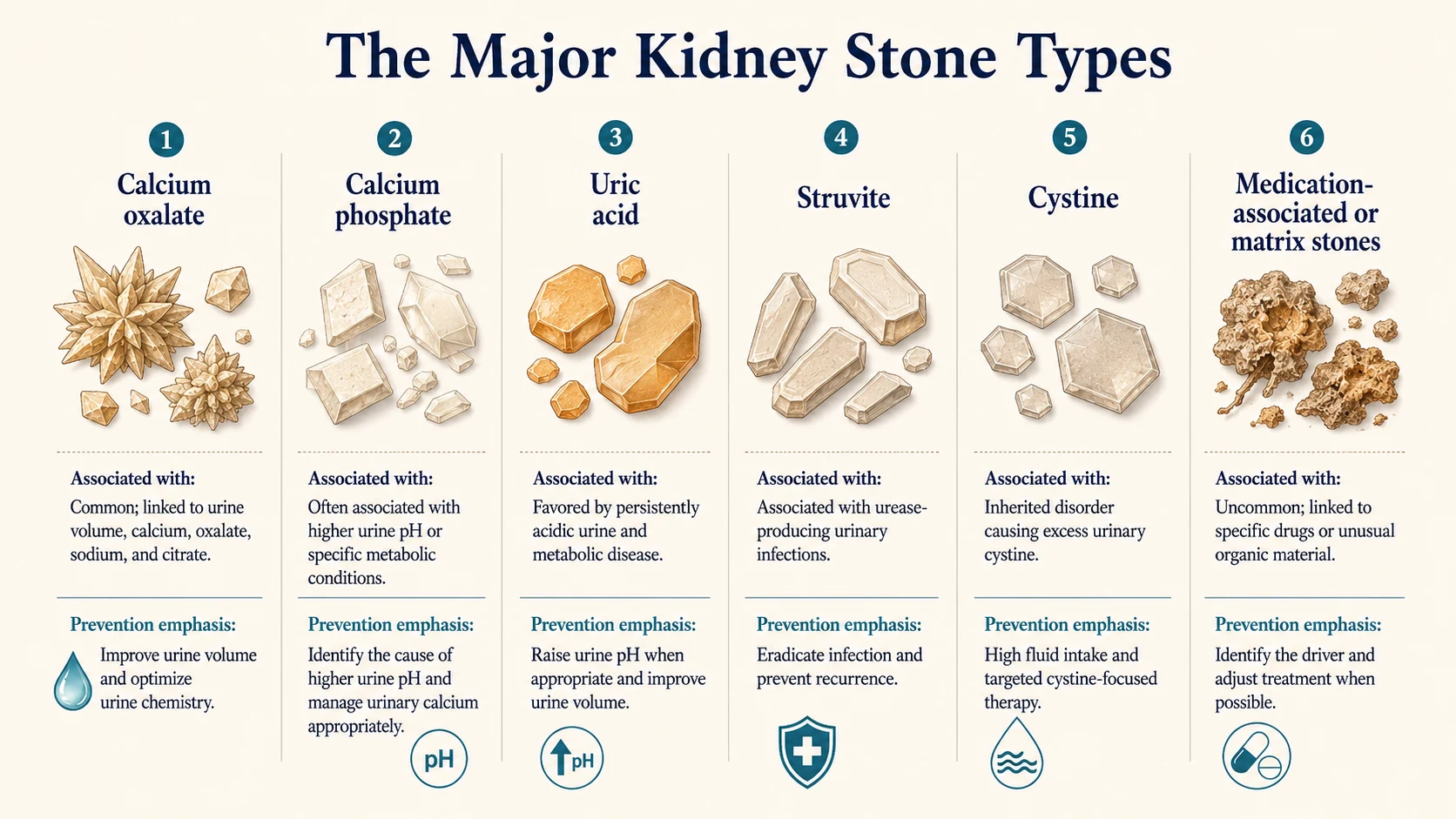
A name is the beginning of a plan
A kidney stone is a mineral deposit, and its composition gives us clues about how it formed. Calcium oxalate is common; calcium phosphate, uric acid, infection-related and cystine stones have different patterns. Many stones contain more than one material. A photograph or a description such as “hard” or “brown” cannot reliably identify the chemistry.
What the laboratory result can tell us
A recovered stone can be analyzed and its components reported. We read that result alongside your imaging, medication history and laboratory findings. Calcium in a stone does not automatically mean that you should stop eating calcium. Uric acid in a stone does not establish every cause of your risk. A useful prevention plan connects the specimen to the person.
Turn the result into questions
Ask which component was most prominent, whether the result fits your previous stones, and which change is most useful now. Your clinician may recommend blood testing, urine testing or dietary counseling. Keep a copy of the report: the next episode should not require starting your stone history from memory. If no stone was recovered, evaluation can still proceed.
Your next steps
- Bring any previous stone-analysis report.
- Record when and how the specimen was obtained.
- Ask what finding will be reassessed after prevention changes.
Keep exploring
Book and sources
Adapted from Stones Unlocked by David Shusterman, MD. Treatment and prevention are individualized.