
Start at the serving size
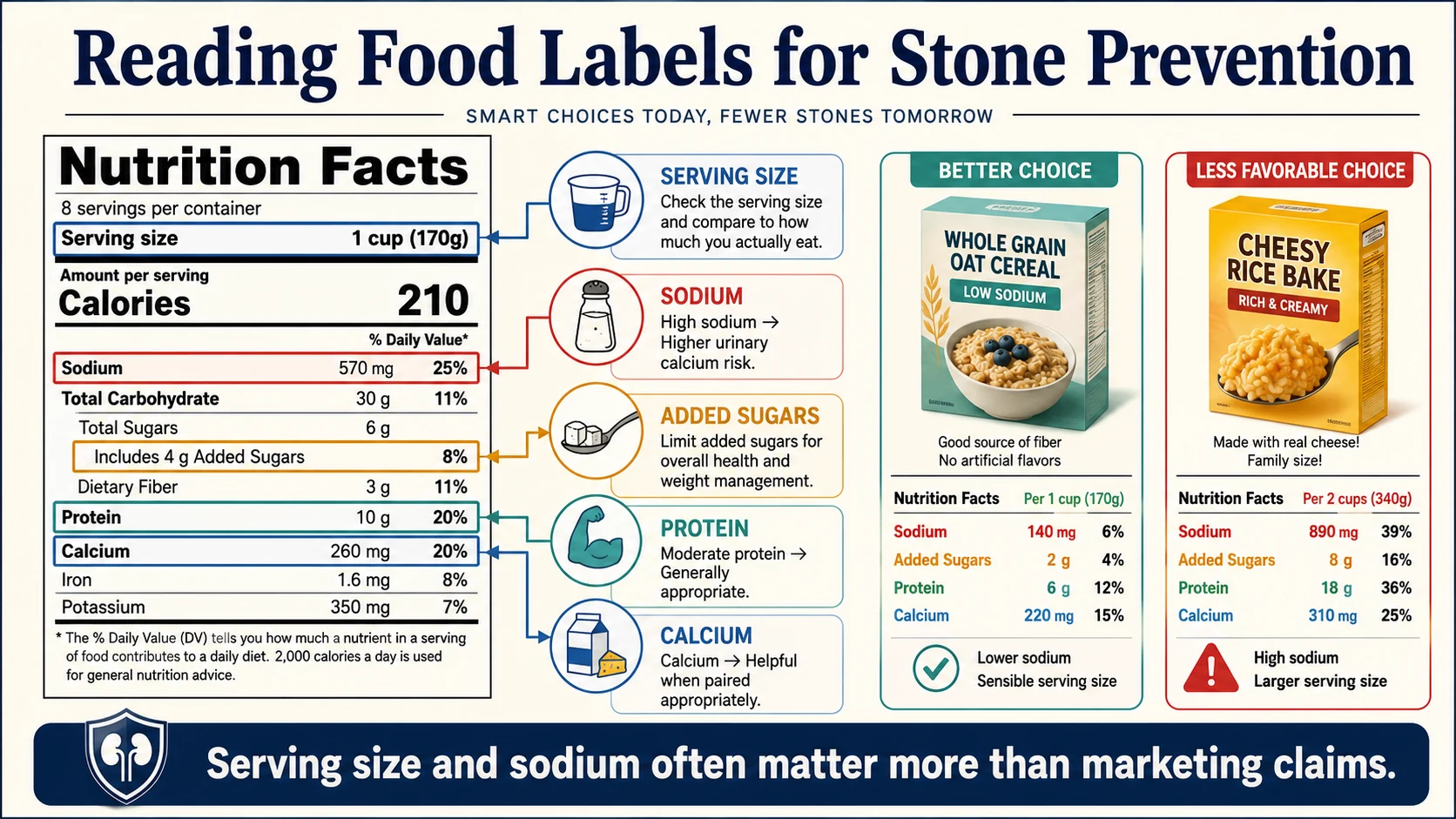
A package can contain more than one serving. The nutrition values generally refer to the stated serving, so compare that amount with what you actually eat. A bowl, bottle or bag is not necessarily one serving. The labels shown in the book are educational examples, not verified commercial products.
Do the portion calculation
For an illustrative food with 400 mg of sodium per serving, eating two servings gives 800 mg. If another food lists a different serving size, make the portions comparable before deciding which has less sodium. The calculator below performs this simple multiplication. It does not set your daily allowance or decide whether a food is appropriate for your medical history.
Look beyond the front of the package
Words such as “natural,” “organic” or “plant-based” do not tell you the sodium content. Read the back label, compare similar products and include sauces or dressings in your meal calculation. A nutrition label usually does not list oxalate, so it cannot answer every stone-diet question. Use your stone analysis and urine findings to decide which dietary factors matter most.
Calculate sodium for your portion
Educational calculation only. Your clinician sets individual dietary goals.
Your next steps
- Check the serving size and servings per container.
- Multiply sodium by the portion you will eat.
- Compare similar portions, then discuss your individual dietary targets.
Keep exploring
Book and sources
Adapted from Stones Unlocked by David Shusterman, MD. Treatment and prevention are individualized.