
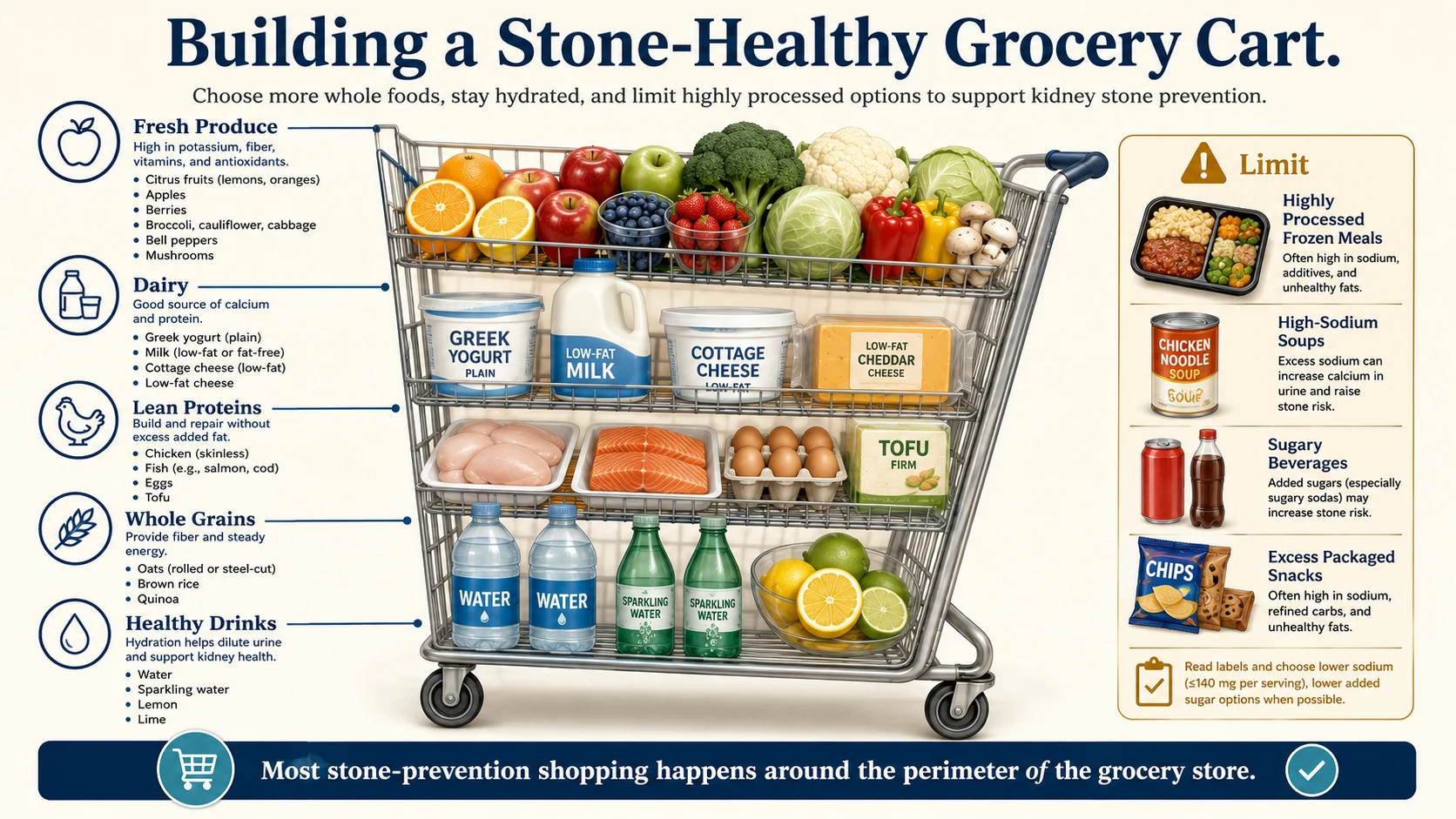
Make a few useful swaps
Compare sodium on breads, soups, sauces and packaged meals you already buy. Choose an option with less sodium for a comparable portion, or reduce a salty sauce while keeping the rest of the meal practical. A homemade meal can still contain substantial salt; ingredients and portions matter more than a healthy-looking name.
Pair advice with your stone chemistry
For many calcium oxalate stone formers, maintaining appropriate food calcium with meals is useful. A clinician may recommend changing large or frequent portions of particular high-oxalate foods while keeping the overall diet balanced. Uric acid, cystine and infection-related stones require their own approach. Do not treat every vegetable, dairy food or protein source as equally relevant to every stone.
Plan for restaurants, work and travel
Bring a water bottle when appropriate, spread your fluid routine through the day and remember that sweat changes losses. Ask for dressings or salty sauces on the side and choose portions you can sustain. If kidney or heart disease imposes food, potassium or fluid limits, those instructions take priority. Review what is working at your next visit and adjust the plan with your results.
Plan the meal before making a shopping rule
A useful meal plan might pair an appropriate calcium-containing food with a meal, choose a less salty sauce and include water within your individual fluid instructions. The exact choices depend on your stone type and health. Calcium oxalate, uric acid and cystine stones do not all have the same prevention plan. Avoid removing entire food groups based only on an internet list.
Bring your real food labels to the visit
Photograph the label of a soup, bread, snack or drink you use regularly. Note how many servings you actually eat. We can discuss the sodium in that portion and the changes that fit your daily life. A smaller portion or a different product may be more practical than giving up a meal completely. Use the serving-size guide’s calculator to compare portions, then connect the result to your own prevention advice.
Your next steps
- Compare two packaged foods using the same portion.
- Choose a repeatable meal change rather than a temporary restrictive diet.
- Bring your usual meals and any medical diet limits to counseling.
Keep exploring
Book and sources
Adapted from Stones Unlocked by David Shusterman, MD. Treatment and prevention are individualized.